
About
What is FOGO?
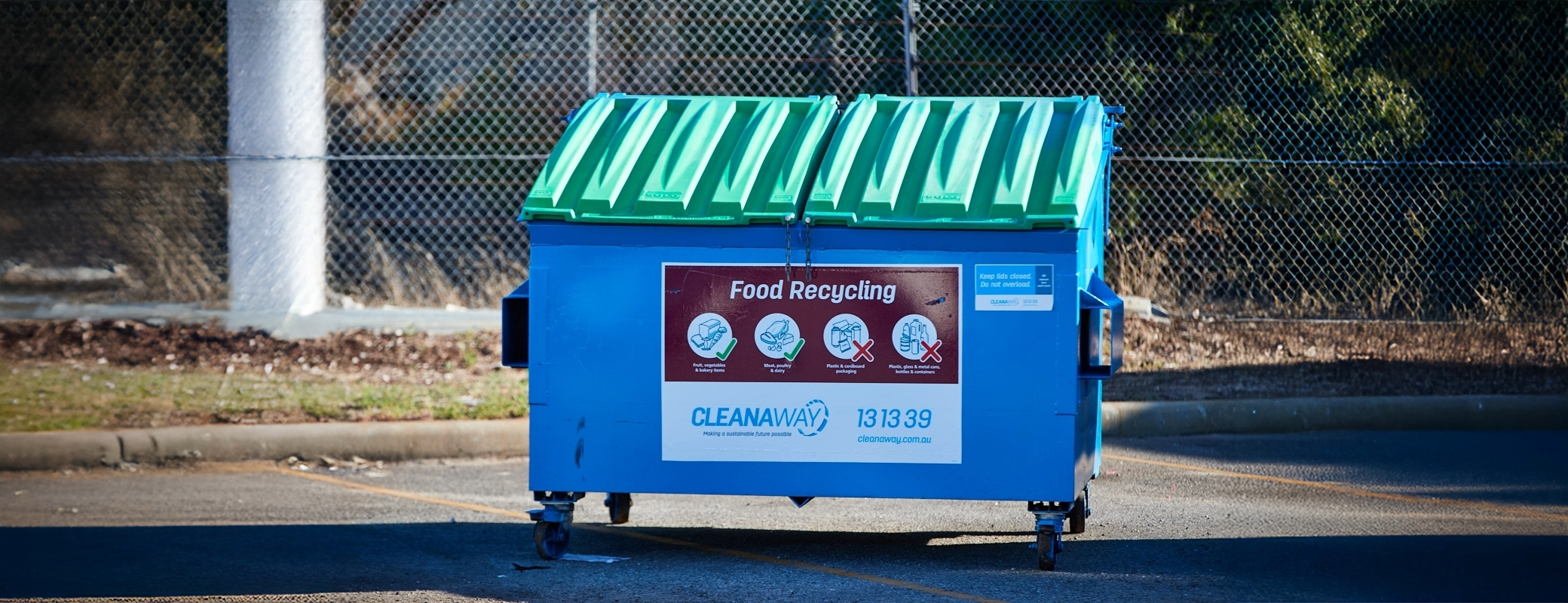
FOGO stands for ‘Food Organics and Garden Organics’, it is a separate waste collection service that recycles food and garden waste into a valuable resource such as compost, supporting the circular economy, enriching our soils and fostering better plant growth. Many commercial businesses may require a Food Organics (FO) service only.

Details
What is the FOGO mandate and why was it introduced?
The NSW FOGO mandate requires businesses and institutions to separate Food Organics and Garden Organics (FOGO) from general waste.
Food waste in landfill breaks down without oxygen, producing harmful greenhouse gases and taking up valuable landfill space. To address this, organic waste must be separated and collected through a dedicated service and taken to an organics processing facility for recycling. Once subject to the mandate, businesses can no longer dispose of food waste in general waste bins.
This mandate supports the NSW Government’s commitment to halve organic waste sent to landfill by 2030 and contributes to Australia’s net zero emissions goals. It also helps conserve landfill space and supports agriculture through the production of high-quality compost.
When do business mandates commence?
A staged approach based on weekly general waste bin volumes will begin from July 2026. Organisations classified as ‘large waste generators’ will transition across first, such as supermarkets, institutions and hospitality businesses. A phased transition approach will continue until July 2030.
Upcoming webinars
Get FOGO Sorted: A webinar for NSW businesses navigating the FOGO mandate
Join Cleanaway for a free educational webinar to help your business understand the NSW FOGO mandate and prepare for the transition.
Learn about key requirements and timelines, practical steps to introduce food organics separation, tips to reduce contamination, and free resources available to support your
business.
Register for an upcoming session

Learn more
Downloadable materials
To help you find the information most relevant to your business, we've brought together a range of practical resources below. Explore customer success stories, watch expert insights on the NSW FOGO mandate, or download sorting guides and implementation resources to support your organics recycling journey.
| Date | Title | Description | Link |
|---|---|---|---|
| Real results from NSW businesses. | Discover how one business achieved measurable reductions in waste costs and contamination within months of implementing FOGO. | Download | |
| Webinar: NSW FOGO mandates in action | Watch the webinar to learn how the FOGO mandate is being delivered in practice, with insights from industry and customers. | Download | |
| A-Z Organics sorting guides | Your guide to sorting clean and packaged organics correctly. Accepted items may vary by region. | Download | |
| Your FOGO mandate guide | Everything you need to know about the NSW FOGO mandate and how it applies to you. | Download | |
No Matching Results. |

Process
What can I do to prepare?
Getting started early can make the transition to FOGO simpler and more cost effective. Consider reviewing your current waste services, identifying where food organics are generated and preparing your team for new sorting requirements.
Whether you're already a Cleanaway customer or looking for a new waste partner, our team can help you plan the transition.
Choose the option that best describes you.

Our service
How Cleanaway can help
Whether you're expanding your existing services or implementing FOGO for the first time, Cleanaway provides end-to-end support to help your business transition with confidence.
From planning and implementation through to ongoing collection and compliance, we work with businesses of all sizes to deliver practical, tailored organics recycling solutions.
With a proven track record of supporting both small and large-scale waste stream rollouts, we offer a range of bin sizes and collection frequencies tailored to suit your needs.
We help your team build confidence with FOGO through in person training, tailored educational resources and ongoing support. From waste audits to online learning, we make it easier to meet compliance requirements and adopt best practice.
Cleanaway works closely with you to provide expert guidance and develop tailored strategies that align with your environmental objectives, optimise resource recovery, reduce disposal costs, and ensure long-term sustainability and compliance.
We offer a total waste management solution, providing you with one account manager, one invoice and consistent, reliable services.
Learn more
Frequently asked questions (FAQs)
Who does the NSW FOGO mandate apply to?
The NSW FOGO mandate applies businesses that produce food waste, including:
- supermarkets
- correctional complexes and centres
- centre-based childcare facilities
- schools, universities and TAFE
- hospitals and mental health facilities
- seniors housing (where council does not provide a collection service)
- restaurants, cafes, takeaway food and drink premises, pubs and bars
- hotel or motel accommodation
- registered clubs that hold a club licence under the Liquor Act 2007
- mobile catering businesses
- common food courts or food halls
- residential accommodation which receives a commercial waste collection service
Large supermarkets will also be required to track and record food donations.
Are there penalties for non-compliance?
Failure to comply with the NSW FOGO mandate requirements can result in significant fines. These include:
Maximum penalties of up to $500,000, with an additional $50,000 per day for continuing offences.
On-the-spot fines of up to $5,000, with higher penalties for repeat offences.
Lower penalties and on-the-spot fines apply for non-compliance with large supermarket food donation reporting requirements
What are the mandate exemptions?
To help businesses adjust to the new FOGO rules, the NSW EPA has introduced temporary FOGO mandate exemptions. Where generic exemptions don’t apply, custom exemptions can be requested.
- Food courts: Some food court operators may be exempt if they do not have control over bins provided in food courts or the collection of waste.
Applies: 1 July 2026 – 1 July 2030 - Regional businesses: Businesses in some regional areas without council FOGO services are exempt.
Applies: 1 July 2026 – 1 July 2028 - Multi-unit dwellings: Occupants in buildings like shop-top housing with commercial waste services are exempt.
Applies: 1 July 2030 – 1 July 2035