
Cleanaway’s safety culture and waste management HSE practices
Strong environmental and workplace safety performance is vital to Cleanaway’s operations and future growth, and naturally aligns with our purpose of making a sustainable future possible together. As a leader in our industry, we are serious about our obligation to be at the forefront of health and safety in waste services, to deliver best-in-class practices that lead the highest waste industry safety standards.
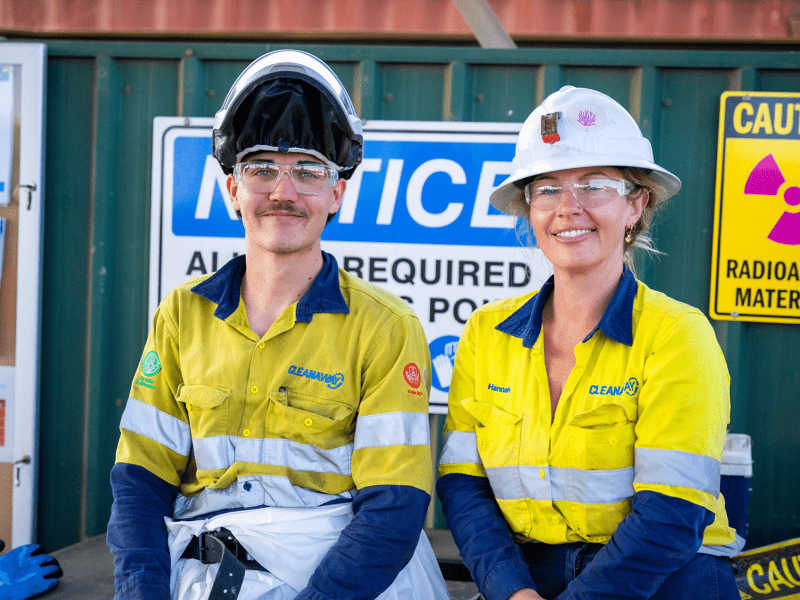
Empowering our team through safety
One of our Guiding Principles is “Keep each other safe” and encompasses our commitment to workplace safety in waste management. With a national workforce of over 9,700+ people spread across more than 300 sites, we believe that empowering our people to do their roles in a safe environment is more important than anything.
This is particularly critical given the nature of our work. The collection, recovery, treatment, and disposal of many waste streams can be inherently hazardous. Through our comprehensive health, safety and environment policies we are committed to minimising the risk of harm to the environment and the communities in which we operate.
Building a strong HSE culture through our strategy and roadmap
Our Health, Safety and Environment (HSE) culture starts with our people. At Cleanaway, every individual has a role to play in creating a safe, healthy and sustainable workplace. Our strategy and roadmap guide us, but it’s the everyday choices, behaviours and commitments of our teams that shape real outcomes.
In 2023, we developed a five-year strategy and roadmap to drive improvements in our HSE performance and culture.
To meet the complex and varied needs of our business, this strategy is multifaceted with emphasis on risk prevention, capability build, and cultural transformation. Our roadmap outlines how everyone at Cleanaway works to keep each other, the environment, and our communities safe.
Historically, we have used the traditional safety lag indicator known as Total Recordable Injury Frequency Rate (TRIFR) as the primary measure of safety performance. With a heightened focus, our TRIFR performance has improved over the past decade.
As part of our focus on proactive and adaptive strategies for preventing accidents and eliminating serious injuries, we recently introduced the Serious Injury Frequency Rate (SIFR) metric, aligned with other HSE-focused organisations as part of our new roadmap.
It is defined by the Workplace Health & Safety legislation as an injury that requires the person to have immediate treatment as an inpatient in a hospital or immediate treatment for several injury types.