
How Cleanaway’s Kemps Creek facility is advancing soft plastics recycling in Australia
Key takeaways
- Cleanaway’s Kemps Creek facility is supporting Australia’s soft plastics circular economy by using FTIR technology to test and analyse hard-to-recycle soft plastics.
- More than 80 soft plastic samples have been tested, generating insights into material composition, contamination levels and requirements for future recycling infrastructure.
- Through Cycleback Plastics with Viva Energy Australia, Cleanaway is helping develop pathways to turn end-of-life soft plastics into new circular plastic products.
Cleanaway’s Kemps Creek facility advances soft plastics circularity through Cycleback Plastics
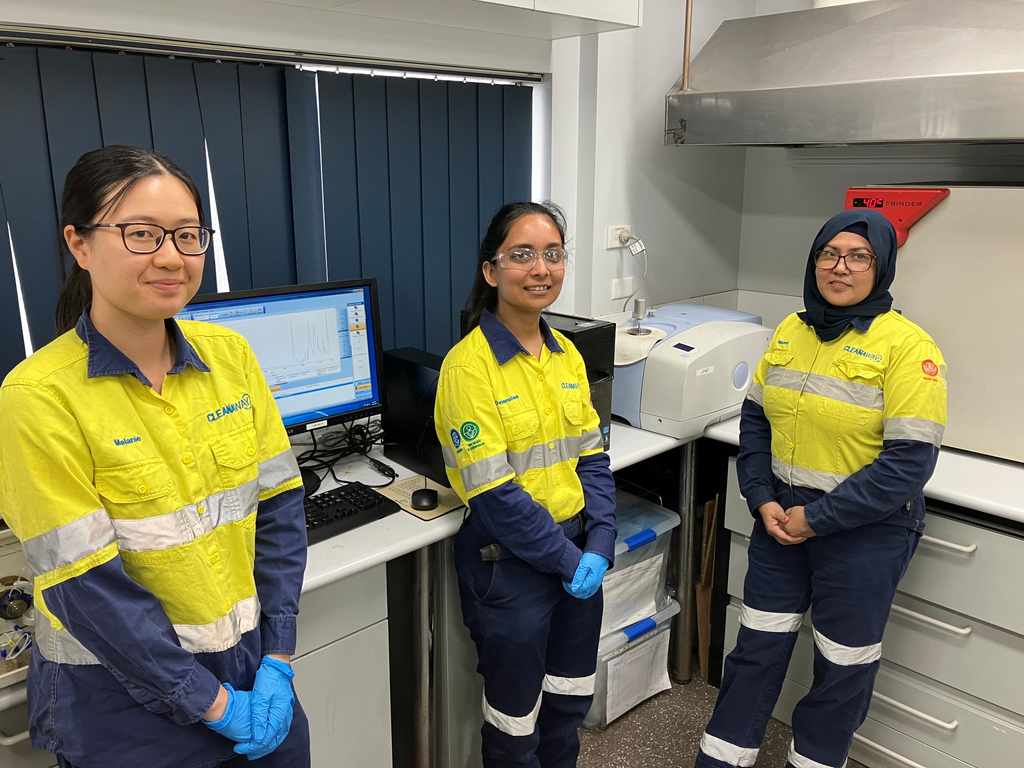
Pictured: Laboratory Assistant Melanie Wong, Laboratory Technician Devanshee Nakrani and Laboratory Manager Naureen Akhter at our Kemps Creek facility.
Cleanaway is taking another important step towards building Australia’s future soft plastics recycling capability, with our Kemps Creek facility providing critical testing and insights through the Cycleback Plastics joint initiative with Viva Energy Australia.
Using Fourier Transform Infrared Spectroscopy (FTIR) technology, the laboratory is helping identify the composition of Australian soft plastic materials, assess their suitability for the Cycleback Plastics process and build the data needed to support future circular recycling solutions.
Since introducing this capability, the team has tested more than 80 soft plastic samples, representing approximately 115kg of material from bag-in-bin collection trials, commercial businesses, retail recovery models and industry partners.
The testing has provided valuable insights into the quality and composition of Australian soft plastic streams while helping inform the design of future sorting and pre-treatment infrastructure.
Building a circular pathway for hard-to-recycle plastics
Cycleback Plastics, an innovation by Cleanaway and Viva Energy, is developing an end-to-end recycling pathway for soft plastics in Australia.
The initiative focuses on creating a circular solution where end-of-life soft plastics can be collected, sorted and processed into plastic pyrolysis oil, supporting the creation of circular food grade plastic resin at the Viva Energy refinery and polypropylene plant in Geelong.
A key challenge is that not all soft plastics are the same. Different packaging types, polymer combinations and contamination levels can impact how materials perform during recycling.
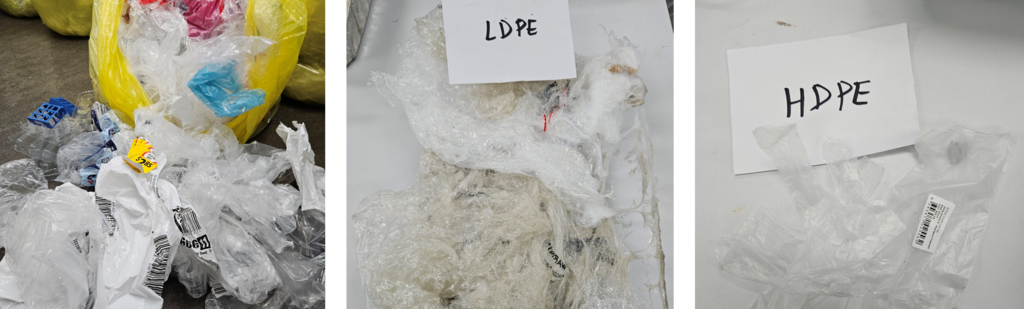
Pictured: Contamination, LDPE, HDPE - understanding the material composition is a critical first step.
How Kemps Creek laboratory testing works
The testing process follows soft plastics from collection through to detailed analysis:
Collection
End-of-life soft plastics generated by businesses and collection programs are separated and collected for assessment.
Laboratory testing
Samples are analysed at Cleanaway’s Kemps Creek laboratory using visual inspection and FTIR technology to identify polymer composition and understand material characteristics.
Reporting and insights
Participating organisations receive a detailed characterisation report outlining material composition, audit findings and contamination insights.
These results help businesses better understand their soft plastic materials while contributing valuable data to improve future recycling outcomes.
Turning testing into practical insights
The Kemps Creek testing program is helping Cycleback Plastics better understand:
- Different soft plastic material types available across Australia
- Contamination levels and quality requirements
- Opportunities to improve sorting and pre-treatment processes
- Suitability of materials for pyrolysis
Testing has included samples from commercial businesses, supermarkets, large retail chains and materials supporting Soft Plastics Stewardship Australia recovery models.
Future testing will expand into more sectors, including SMEs, hospitality, healthcare, universities and the packaging industry.
Progressing towards an Australian circular solution
Cycleback Plastics is currently in feasibility phase and has already completed important work across the value chain, including laboratory validation, pre-treatment testing, pyrolysis trials and assessment of processing pathways.
This work has helped identify technology solutions, automation opportunities such as optical sorting, and the requirements needed to develop reliable feedstock streams.
While dedicated local processing infrastructure is still being developed, the insights generated today are helping build the systems, capability and partnerships needed for the future.
Through investment in innovation and collaboration, Cleanaway is helping create practical pathways to give Australia’s soft plastics a new life.
Have you read our 2026 Recycling Behaviours Report? Australians are asking for a system that turns plastic back into plastic - whether it be soft plastic or the rigid (hard) plastics accepted through current kerbside recycling bins.