Submit an enquiry:
If you have a question, would like more information, or would like to provide feedback about the proposed Chullora Waste Transfer Terminal, please complete the form below.
A member of the project team will respond as soon as possible.
About the project
Greater Sydney’s landfill capacity is expected to become increasingly constrained over the coming decade. Recycling, organics processing and other forms of resource recovery will continue to improve, but some residual waste will remain. This is non-recyclable material otherwise known as red-lid bin waste that currently goes to landfill.
The proposed Chullora Waste Transfer Terminal would provide a safe, reliable and long-term pathway for managing this residual waste. Located within an established industrial area with direct access to rail, the purpose-built facility would receive, inspect, compact and containerise residual waste before rail transporting it in sealed containers to the proposed Parkes Energy Recovery Facility.
At Parkes, residual material will be processed for energy recovery as part of a more sustainable approach to long-term waste management. Energy recovery is not a replacement for recycling or organics recovery. The priority is always to reduce, reuse, and recycle first. Energy recovery is for residual waste that remains after recycling.
Supporting New South Wales’ waste management network
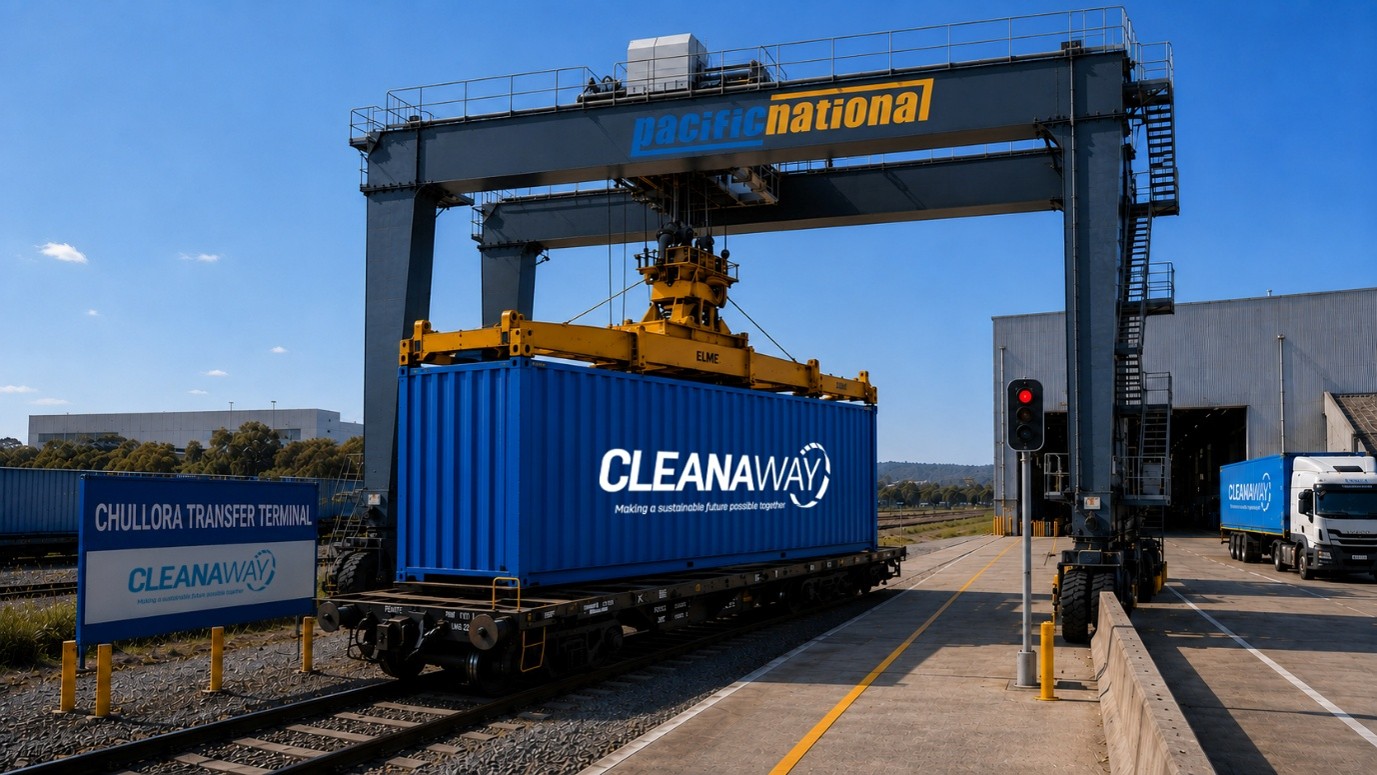
The proposed Chullora Waste Transfer Terminal would provide the connection between Sydney's residual waste and the Parkes Energy Recovery Facility. Chullora is well suited to this role because it has direct access to rail at the existing Pacific National - Sydney Freight Terminal, is located within an established industrial area and is close to significant volumes of Sydney's municipal residual waste.
Providing a long-term pathway for genuine residual waste as available landfill capacity in Sydney becomes increasingly constrained.
Purpose-built, enclosed infrastructure designed to support safe, controlled and efficient residual waste handling.
Using rail-based transport to connect Sydney with Parkes and reduce the impacts associated with long-haul road freight.
Connecting Sydney's residual waste to an energy recovery pathway for material that cannot be recycled or otherwise recovered.
Key project features
Purpose-built transfer terminal
A purpose-built facility designed to centralise the handling of residual material from across Sydney.
Weighbridge and inspection
Vehicles undergo screening, weighing and access control as part of the transfer process.
Enclosed waste handling
Waste is tipped inside an enclosed building, supporting controlled and efficient operations.
Integrated logistics
The facility is designed to support both road-based and rail-based transfer, with rail access planned through the existing rail freight corridors.
Storage and off-site transfer
Waste is safely stored in sealed containers for rail transport to Parkes Energy Recovery facility.
Planning and environmental assessments
Cleanaway is currently progressing planning and environmental assessments for the proposed facility.
Technical investigations and specialist studies are being undertaken to assess:
- Traffic and transport
- Noise and amenity
- Air quality and odour management
- Stormwater and drainage
- Landscaping and visual impacts
- Biodiversity
- Operational and environmental management measures.
The project will be assessed through the relevant NSW planning and environmental approvals processes.
The dates above are target dates and may be subject to change.
Frequently Asked Questions
What is being proposed?
The Chullora Waste Transfer Terminal is a proposed waste transfer facility that would receive residual waste from across metropolitan Sydney and transfer it into sealed containers for rail transport to the proposed Parkes Energy Recovery Facility (PER facility).
The facility would also receive Food and Garden Organics (FOGO), which would be transferred by road to Cleanaway’s Eastern Creek Organics site for composting.
Recovery and recycling activities are also proposed at the facility to help recover materials where practical.
Why is the facility being proposed?
Sydney requires reliable infrastructure to manage residual waste that remains after practical recycling and resource recovery opportunities.
The proposed Chullora Waste Transfer Terminal would consolidate this waste into larger rail consignments for transport to the proposed PER facility, supporting greater use of rail for the long-distance transport of waste.
Why did we choose Chullora?
Chullora was selected as the preferred location because it is an established industrial and logistics precinct with direct access to rail infrastructure and major freight routes, including Rookwood Road, and the M4 and M5 motorways.
The site is well-positioned to receive waste across metropolitan Sydney and facilitate its transfer by rail to the proposed PER facility.
Why is rail being used to transport waste?
Rail would allow larger volumes of waste to be transported over the long distance between Sydney and Parkes, reducing the number of long-distance heavy vehicle movements required on the road network.
The proposed PER facility is approximately 450km from Sydney. Using rail for bulk transport is expected to avoid more than 100 semi-trailer movements along the Great Western Highway and over the Blue Mountains.
Cleanaway has partnered with Pacific National, which has an established history of transporting waste by rail in NSW. The use of rail also supports the NSW Government’s objective of reducing the impacts of long distance freight movements on communities along major road haulage routes.
How much waste will the facility handle?
The proposed facility has been designed to manage up to 800,000 tonnes of residual waste per year from metropolitan Sydney.
What is the planning approval process for the proposed facility?
The project is being assessed through the NSW planning approvals process.
This includes detailed environmental and technical studies, consultation with government agencies and the community, public exhibition of relevant planning documentation, consideration of submissions received, and a decision by the relevant determining authority.
What will the facility's operating hours be?
The proposed facility would operate 24 hours per day, seven days per week to support waste management requirements and freight rail options.
If you have a question or would like to speak with Cleanaway, please contact us:
 Email: [email protected]
 Community hotline: 1800 213 753